What’s actually true here? A simple question that changes how you handle pressure at work
Updated: May 8
There’s a question I keep coming back to in difficult meetings, under pressure, or in the middle of a week that’s starting to feel like too much.
It’s four words. Most people hear it as a challenge. It’s actually a reset.
What’s actually true here?
When pressure builds in the workplace
It came from a conversation with my line manager, in the middle of a project that wasn’t landing the way I expected.
On the ground, the project was working.
Teams were engaging
The experience was landing
Feedback from those using it was strong
At stakeholder level, though, it felt different.
The questions were direct. Challenging. At times, openly negative.
“I’m not convinced this will land.”
“This feels like a big shift for something that’s already working.”
“Why would we move away from what we know is safe?”
This wasn’t light hesitation. It was sustained resistance and that’s where the pressure starts to shift internally.

How quickly your thinking changes under pressure
The confidence you walked in with starts to fade. Your thinking speeds up.
The internal monologue kicks in:
They don’t believe in this
This isn’t going to get through
I need to push harder
The meeting ends, but the thinking doesn’t. You carry it forward, replaying it, reinforcing it, turning a moment into a narrative.
The turning point: separating fact from interpretation
When I sat down with my line manager afterwards, explaining why the project felt difficult to deliver, they asked:
“So what’s actually true here?”
At first, it didn’t land well. It felt like pushback but it wasn’t questioning me. It was questioning the story I had already created.
Fact vs story: the distinction that changes everything
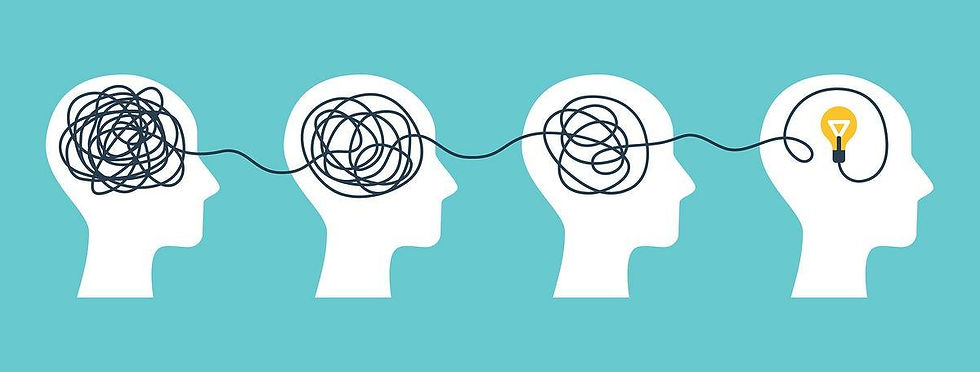
Every difficult situation has two layers:
Fact — what has actually happened
Story — what you’ve added to it
In that moment:
Fact:
Stakeholders were challenging the approach
They were leaning towards safety
No decision had been made
Story:
This is going to fail
I’m losing control of the room
I need to push harder
One reflects reality. The other escalates it.
Why your brain amplifies pressure
Even when resistance is real, your mind doesn’t just reflect it. It amplifies it. What starts as a challenge begins to feel like a threat. Nothing has actually escalated, but internally, it already has.
And that’s where behaviour starts to change.
You push harder than needed
You become more defensive
You try to force alignment
Ironically, that’s what creates real resistance.
What changed when I focused on what was true
Once I separated fact from story, everything shifted. Not the situation. My response to it.
The conversation slowed down
The focus returned to what we actually knew
We worked through concerns instead of reacting to them
The resistance that felt like a threat became something we could address.
We aligned where needed, backed decisions with data, and made improvements that strengthened the project. The result was something everyone could support.

Why this mindset matters at work
This isn’t about avoiding difficulty. The situation was difficult. It’s about not making it heavier than it needs to be because most pressure doesn’t come from the situation alone. It comes from the meaning layered on top of it.
A challenge becomes a threat
A question becomes doubt
Hesitation feels like failure
And once that shift happens, behaviour follows it.
A simple question to bring you back to clarity
Most people don’t react to what’s actually happening. They react to the version of events they’ve already created in their minds and it happens so quickly, they don’t notice the difference.
The question that closes that gap is simple:
What’s actually true here?
Because if you don’t ask it, you don’t just deal with the situation. You deal with your version of it.


Comments